

Andrew is a copywriter and journalist who splits his time between Prague and his native England. He has worked as a reporter, writer and editor for publications including The Prague Post, Guardian, Dazed & Confused and Metro.
Varicose veins are generally caused by vein walls and valves that have become weak. Our veins contain tiny one-way valves that open to let blood flow through them and close to prevent blood flowing backwards.
Sometimes the walls of our veins become weak and lose their elasticity, causing blood to leak through the valves. When this happens, blood can pool in the vein, making them swell up and become ‘varicosed’. [1]
What are varicose veins?
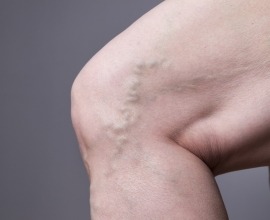
Varicose veins are enlarged and sometimes twisted veins that most commonly appear in the legs. The reason for this is because walking upright and standing for long periods of time increases pressure in lower parts of the body. [2]
For the majority of sufferers, varicose veins appear as spider veins – a mild form of varicose veins – and are simply a cosmetic, rather than a medical, concern. For those with more serious forms, however, varicose veins can cause swelling, discomfort and circulation issues.
Who is at risk of developing varicose veins?
According to research, approximately 25% of all adults have varicose veins. In the vast majority of cases, varicose veins form on the lower legs. [3]
Gender, genetics and age play a major role in the likelihood of someone developing varicose veins. Women are more likely to have varicose veins than men with research suggesting this may be because female hormones have a relaxing effect on vein walls, causing the valves to be more susceptible to leaking.
Other factors that can affect the development of varicose veins include hormones caused by pregnancy, the menopause, premenstrual syndrome and whether a close family member has the condition.
A number of other factors can increase your likelihood of developing varicose veins, including:
-
Being overweight
-
Working in a job that requires long periods of standing
-
Being pregnant
-
Older age
What are the symptoms of varicose veins?
Varicose veins are highly visible – they generally appear as enlarged or misshapen veins on your legs. If you have varicose veins, you’ll also likely feel some swelling and achiness around the veins. In some cases, veins will become discoloured and bleed significantly, causing ulcers to form.
How to treat varicose veins
In most cases, varicose veins do not need to be removed. However, if varicose veins are causing you discomfort or you’d like to remove them for cosmetic reasons, there are a number of treatment methods available including:
-
Laser treatment. Usually used to treat small varicose veins, this procedure involves using a laser to direct light energy at a vein causing them to fade over time. [4]
-
Sclerotherapy. This method involves injecting a chemical into the vein causing it to collapse and stop it from being able to transport blood.
-
Catheter-assisted ablation. Using a combination of heat and radio waves or lasers, this method is used to close and ultimately destroy veins which have become varicosed.
-
Surgical vein removal
Before deciding which is the best course of action for yourself, get in touch with a qualified dermatologist or vascular surgeon who will be able to discuss the various varicose vein removal procedures with you in more detail.
SOURCES:
[1] https://www.nhs.uk/conditions/varicose-veins/causes/
[2] https://www.mayoclinic.org/diseases-conditions/varicose-veins/symptoms-causes/syc-20350643
[3] https://www.healthline.com/health/varicose-veins
[4] https://www.webmd.com/skin-problems-and-treatments/understanding-varicose-veins-treatment