

moved to Prague to teach English and marvel at the city’s fairytale-like landscape; she is also a freelance writer and transcriber with an insatiable appetite for travel. In her spare time she enjoys going to the movies, writing stories and listening to music.
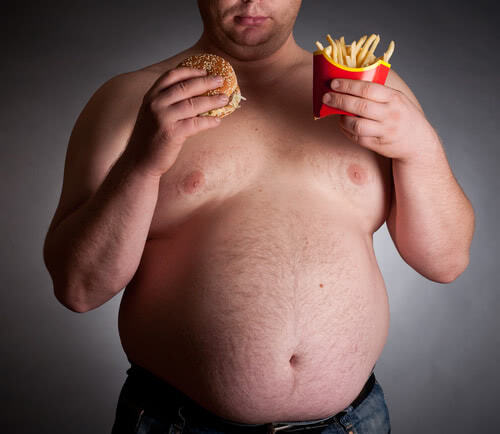
Obesity is a medical condition where excess body fat has accumulated to a point where it impacts an individual’s healthy negatively. A person is classified as obese when their Body Mass Index (BMI), a measurement that comes from dividing a person’s weight by the square of their height, exceeds 30kg/m2.[1]
According to the World Health Organization (WHO), there are three general classifications of obesity: Class 1 Obesity; Class II Obesity; and Class III obesity, which are further broken down into the following:
1 – Severe Obesity, which is any BMI between 35-40 kg/m2
2 – Morbid Obesity, which is any BMI between 40-44.9 kg/m2
3 – Super Obesity, which is any BMI between 45-50 kg/m2 [2]
Obesity is the 21st century’s most prominently visible – yet most neglected – of serious public health problems. The worldwide escalation of being obese and overweight – “globesity” – has reached a point where millions will stand to suffer from obesity-related health consequences if immediate action is not taken. [3]
The recognition of obesity as a disease was first brought forth by WHO taking on the International Classifications of Diseases (ICD) when it was first established in 1948; but the disease was considered irrelevant and unimportant by medical professions despite new evidence and data collected by WHO.[4]
A reason why obesity was previously ignored by the majority of the medical world was due to the fact that medical professionals were highly focused on the current persistent clinical issues and their management (cancer, cardiovascular diseases, congenital abnormalities etc.).[5] Anyone with health issues related to obesity was simply advised to reduce their food intake and to adopt a stricter discipline on the quantity of their meals.

Obesity only became a potential government concern during the mid-1970s when a slew of studies related to obesity from both the United States and the United Kingdom led to the establishment of obesity research centers. However, beyond this, there was little further government action and WHO, who then had their priorities concentrated on the health issues of the so-called “Third World”, resulted in obesity continuing to be ignored.[6]
It was only in 1995 when WHO found prevalent issues of overweight than underweight in developing countries that led to a special obesity consultation in 1997 to highlight the escalating threat of the disease on a global scale.[7]
Now, governments worldwide recognize the problem of obesity amongst the population but neither they nor WHO know how to combat an epidemic that is so intrinsically integrated into the societal and psychological frameworks of the global population. To combat obesity would require a dramatic shift in society where routine spontaneous physical activity and low energy-density food of high nutrition become the norm.[8]
SOURCES
[1] ‘Obesity’ in Wikipedia, Modified September 22nd, 2015, viewed on October 25th, 2015, https://en.wikipedia.org/wiki/Obesity
[2] ibid
[3] ‘Controlling the Global Obesity Epidemic’ in World Health Organization website, published on March 3rd, 2003, viewed on October 25th, 2015, http://www.who.int/nutrition/topics/obesity/en/
[4] Professor WPT James, ‘WHO Recognition of Global Obesity Epidemic’, in International Journal of Obesity, London School of Hygiene and Tropical Medicine, London, 2008, pg. 32
[5] ibid
[6] Professor WPT James, ‘WHO Recognition of Global Obesity Epidemic’, in International Journal of Obesity, London School of Hygiene and Tropical Medicine, London, 2008, pg. 32
[7] ibid
[8] ibid