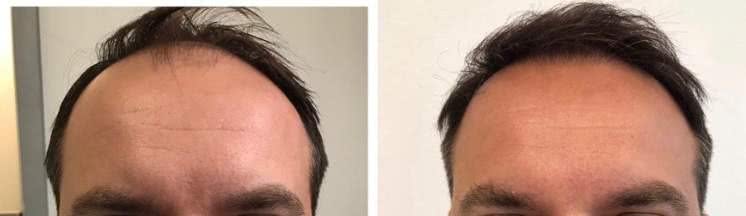








What is ARTAS®
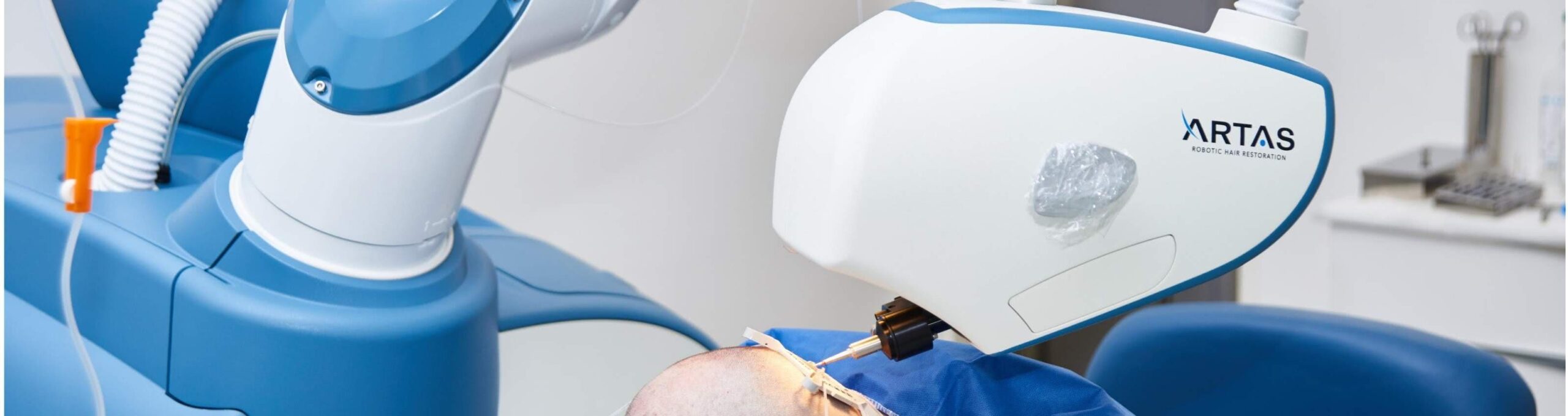
ARTAS® is a Robotic System that works with utmost precision to eliminate human error. Developed specifically for use in Follicular Unit Extraction (FUE) during hair transplant procedures, Artas® has a unique design regarding two key features: the way it collects follicular unit grafts and the way it prepares the recipient area. Thanks to the efficient process, wounds heal swiftly without scarring. This allows patients to return to work straight away without additional physical burdens or time off for recovery.
The optical feature and robotics consists of a three-dimensional guidance system and dual punch mechanism that first locates then extracts follicular units. It acts according to specifications programmed in by a physician. The system repeats this function hundreds, even thousands, of times per session with such consistency and accuracy that no human hand could possibly replicate. The robot creates what is referred to as a recipient site, where follicular unit grafts are placed according to an aesthetic plan, which is originally designed by a physician and then programmed into the robot.
Two main advantages of Artas
Graft harvesting
A successful FUE graft carried out manually at the hand of a physician requires extreme precision and little margin of error. Imagine a doctor first selecting each follicular unit, estimating the angle of the hair, centering the extraction tool over the unit then cutting the skin around the follicles at the correct angle and depth. In order to achieve a great look, this sequence of tasks would require hundreds or thousands of rounds of repetition.
The smallest deviation in position with a hand-held instrument could result in damage, otherwise known as transection, to a follicular unit. Since the growth center of a strand of hair lies within the base of the follicle, the entire follicle must be removed intact or it will be of little value in the transplant. Extracting thousands of grafts over multiple hours with the precision required to minimize transection would be physically and mentally taxing even for the most highly skilled surgeon.
The optical guidance system of the robot locates each follicular unit for extraction, positions its arm and then places the punch tool at the correct angle. Its punch tool scores the skin then penetrates deeper into the tissue at the optimal depth to ensure that no damage occurs. It repeats this process with microscopic precision for as long as necessary. A graft selection algorithm further enhances harvesting efficiency by increasing the number of hairs extracted per attempted harvest.
Recipient Site Creation
Manual recipient site creation requires the surgeon to create hundreds or thousands of sites in the scalp where follicular units are placed. These sites are crucial in determining the aesthetics of the transplant because they determine how the transplanted hair will grow. They must be created with a specific distribution and spacing and with the appropriate depth because this will allow the hair to grow at the correct angle and direction. The pattern created by the surgeon must be natural and integrated with existing hairs. Every site must be made to exact specifications or else the transplanted follicle might not survive. As with harvesting, it would be physically and mentally taxing to perform such a high-precision task repeatedly for thousands of grafts.
In robotic recipient site creation, the surgeon programs the design plan and other specifications into the ARTAS robot. The computer-driven guidance mechanism then positions the robotic arm and, in a microsecond, the robot locates an area of bald scalp at its specified distance from surrounding follicles then it deploys the cutting tool to create the site at the exact angle and depth programmed by the surgeon. As it proceeds, it calculates the number of recipient sites that it still needs to create in order to achieve the ideal density of transplanted hair. All of this happens at a brisk pace and with three-dimensional accuracy, which allows the ARTAS system to create over 1 000 sites per hour with optimal efficiency and efficacy.